
Benefits of ACP Elevation for Modern Commercial Buildings
Modern commercial buildings need more than structural strength. Their exterior appearance also plays an important role in creating a professional identity. A well planned ACP Elevation Design can give a commercial property a clean, contemporary, and durable appearance while allowing designers to explore different shapes, colours, and finishes. For businesses in Coimbatore, where commercial spaces continue to evolve with changing architectural preferences, choosing the right exterior material can make a practical difference.
ACP, or Aluminium Composite Panel, is widely used for commercial exteriors because it combines a lightweight structure with a modern visual finish. From office buildings and retail outlets to showrooms and corporate spaces, an Aluminium Composite Panel Elevation can be adapted to different architectural styles. However, the right design should not be selected only for appearance. Building structure, climate, maintenance requirements, safety, budget, and long term performance should also be considered.
This guide explains the practical benefits of ACP elevation for modern commercial buildings, current design considerations, common mistakes, and useful tips for planning an exterior project.
Why This Topic Matters
The exterior of a commercial building is often the first physical feature people notice. Customers, visitors, employees, and business partners may form an initial impression based on the building's appearance. A thoughtfully designed façade can make a property look organised, professional, and suitable for its purpose.
For example, consider two commercial buildings located on the same street. One may have a plain concrete exterior with limited visual definition. The other may use carefully planned panels, contrasting finishes, glass elements, signage, and architectural lighting. The second building can create a stronger visual identity without requiring unnecessary decorative elements.
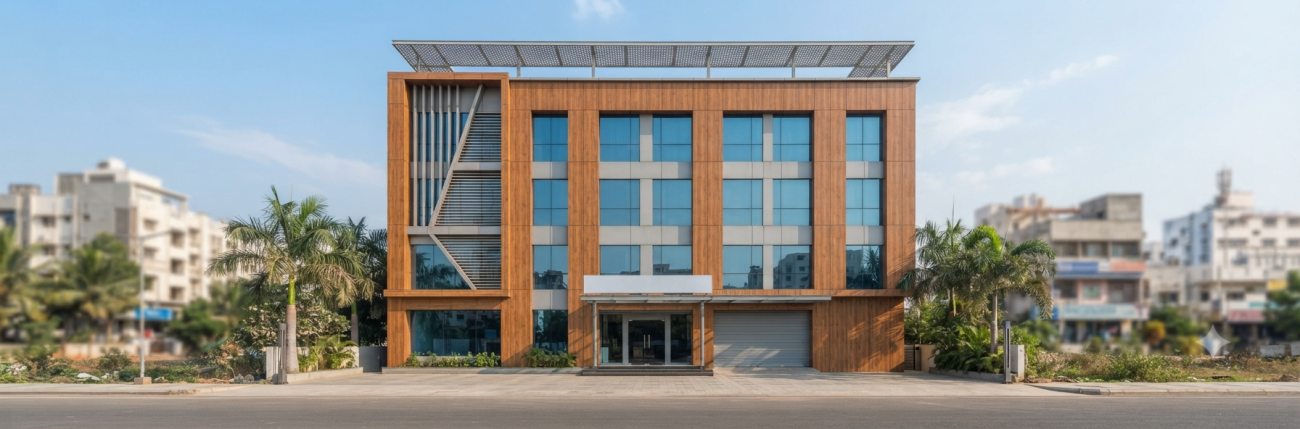
This is where ACP Exterior Design becomes useful. Aluminium composite panels can be cut, shaped, folded, and installed in different configurations. Designers can use them to highlight entrance areas, create horizontal or vertical patterns, frame windows, or provide a consistent finish across different sections of a building.
The material also supports design flexibility. A small retail building may require a simple façade, while a larger office or showroom may need multiple elevations with different visual zones. Proper planning allows the material to support both applications.
Another important consideration is the relationship between appearance and functionality. An attractive façade should also allow appropriate access for maintenance, accommodate building movement, and work with other exterior materials. A balanced approach generally produces better long term results than choosing a design based only on current trends.
Current Trends in Professional Website Design
Although a building project and website design are different areas, both reflect an important modern business principle: professional presentation should support usability and trust. Businesses today are expected to maintain a consistent identity across their physical location and digital presence.
Modern website design increasingly focuses on mobile first layouts, clear navigation, accessibility, website speed, security, and useful content. Search engines also evaluate many technical and user experience signals when understanding websites. Core Web Vitals, for example, are designed to measure aspects of loading performance, responsiveness, and visual stability.
The same thinking can be applied to commercial building design. A modern façade should not simply look attractive from one angle. It should work as a complete visual system. Materials, colours, proportions, signage, lighting, entrances, and surrounding elements should complement each other.
AI driven search is also changing how customers discover businesses online. People increasingly ask conversational questions instead of relying only on short search phrases. This makes clear, useful, well structured information important for businesses. A physical commercial property can benefit from the same clarity through visible branding, understandable signage, and a recognisable exterior identity.
Website speed and security have become basic expectations online. In building design, durability and maintenance play a similar role. A façade that looks excellent initially but requires frequent repairs may not be the most practical choice.
For this reason, both digital and physical brand experiences should focus on long term usefulness rather than short lived visual trends.
Benefits of Having a Professional Website
A professional website can help a business explain its services, answer customer questions, establish credibility, and provide information at any time. However, its benefits go beyond simply having an online presence.
A website can also support local search visibility. Businesses targeting customers in Coimbatore, for instance, can provide clear information about their services, location, working areas, and expertise. Useful content helps visitors understand whether the business is relevant to their needs.
The same principle applies to a commercial building's exterior. A professional façade can communicate the nature of a business before someone enters the property.
1. Creates a Strong Visual Identity
One of the main benefits of ACP elevation is its ability to create a distinctive appearance. Panels are available in different colours, textures, and finishes, giving designers flexibility when developing a façade.
A corporate office may use neutral metallic tones for a professional appearance. A retail showroom may use contrasting colours to create stronger visibility. A technology company may prefer a minimalist façade with clean geometric lines.
The design should reflect the business rather than simply copying another building.
2. Supports Modern Architectural Styles
A Modern ACP building elevation can introduce clean lines and structured forms to commercial architecture. Panels can be arranged horizontally, vertically, or in geometric patterns depending on the architectural concept.
Simple designs often remain visually relevant for longer because they are easier to maintain and adapt. Excessive patterns or unnecessary decorative elements may become outdated more quickly.
Designers can also combine ACP with glass, concrete, stone finishes, metal elements, and lighting. This creates depth without relying on one material throughout the entire façade.
3. Lightweight Exterior Solution
Aluminium composite panels are generally lightweight compared with many traditional exterior cladding materials. This characteristic can make them useful for projects where reducing additional façade weight is an important consideration.
However, the actual suitability depends on the building structure, panel specification, framing system, and installation method. Structural requirements should always be assessed by qualified professionals before installation.
4. Wide Range of Design Possibilities
One of the most useful advantages of ACP is design flexibility. Panels can be used to create different façade patterns and visual zones.
Some commonly explored ACP Elevation Design Ideas include:
✓ Horizontal panel bands
✓ Vertical fins and strips
✓ Entrance framing
✓ Geometric patterns
✓ Contrasting panel combinations
✓ Feature walls
✓ Canopy and fascia applications
✓ Signage backgrounds
✓ Minimalist monochrome façades
These options allow the same material to work across different commercial building types.
For businesses researching the Best ACP Elevation Design for Modern Buildings, the most suitable option is usually the one that balances appearance, structural requirements, maintenance, climate, and budget rather than simply choosing the most elaborate design.
5. Easier Visual Maintenance
A well planned ACP façade can provide a relatively uniform exterior surface. Depending on the selected finish and environmental conditions, routine cleaning can help maintain its appearance.
Maintenance requirements still depend on factors such as dust exposure, pollution, rainfall, panel finish, installation quality, and building location. Commercial properties in busy urban areas may require more frequent cleaning than buildings in quieter surroundings.
6. Helps Create a Professional Commercial Appearance
Commercial buildings often need to communicate reliability and organisation. A clean façade can contribute to that impression.
This is particularly useful for offices, clinics, educational buildings, retail stores, restaurants, and showrooms. The exterior can be planned around the company's logo, entrance, signage, lighting, and customer access points.
The objective should be visual consistency. A building does not need excessive decoration to appear premium.
7. Supports Long Term Design Planning
A façade should be considered as part of the building's overall lifecycle. Future signage, lighting, maintenance access, repairs, and potential business changes should be considered before installation.
A flexible Aluminium Composite Panel Elevation can make it easier to create defined areas for branding and architectural features. Proper detailing at joints, corners, edges, and openings is especially important for long term performance.
Common Mistakes Businesses Make
Even a good material can produce poor results when the design or installation process is rushed. Several common mistakes should be avoided.
Choosing Design Based Only on Appearance
A design may look impressive in a 3D rendering but perform differently after installation. The building's orientation, local climate, surrounding structures, and maintenance requirements should be considered before finalising the concept.
Ignoring Material Specifications
Not every ACP product has the same characteristics. Core type, thickness, coating, finish, fire performance, and manufacturer specifications can vary.
The material should be selected according to the project's requirements instead of choosing solely on price.
Overusing Colours and Patterns
Too many colours can make a commercial façade look crowded. A limited palette with carefully selected accent areas often creates a more balanced result.
Poor Joint and Edge Detailing
Panel joints, corners, openings, and edges require careful detailing. Poor workmanship can affect both appearance and long term performance.
Installation should follow appropriate technical specifications and manufacturer recommendations.
Forgetting Maintenance Access
A façade may be difficult to clean or repair if maintenance is not considered during design. Access requirements should be planned before installation rather than after the building is completed.
Copying Another Building
A design that works well for one property may not suit another. Building proportions, surroundings, branding, and purpose all differ. Inspiration can be useful, but the final design should respond to the actual property.
Expert Tips Before Building Your Business Website
Before planning a commercial façade, business owners should approach the project with the same care they would use when developing a professional digital presence.
Start by defining the building's purpose. A showroom may need strong street visibility, while an office may prioritise a formal corporate appearance. The façade should support these objectives.
Next, evaluate the existing structure. The proposed ACP system should be compatible with the building and its supporting framework. Structural assessment and professional installation are important parts of the process.
Create a clear colour and material plan. Consider how the façade will appear during daytime, evening hours, and under artificial lighting. A finish that looks attractive in a sample may appear different when applied across a large surface.
Think about the local environment. In Coimbatore, dust, heat, rain, and surrounding development can influence cleaning and maintenance requirements. Choosing suitable finishes and planning practical access can help maintain the building's appearance.
Budget for the complete project rather than only the panel material. Framing, fasteners, fabrication, labour, access equipment, detailing, lighting, signage, and maintenance can all contribute to the final cost.
Review the design from multiple viewpoints. A façade should look balanced from the main road, entrance, side elevations, and nearby pedestrian areas. This is particularly important for buildings located at intersections or on busy commercial streets.
Finally, work with professionals who understand both design and installation requirements. DESIGNEXT brings 12+ years of industry experience and has worked with 260+ happy clients, providing useful experience when evaluating commercial façade requirements.
For readers who want to understand the subject in greater detail, the Benefits of ACP Elevation for Modern Commercial Buildings can also be considered as part of the broader planning process for an ACP based commercial façade.
Frequently Asked Questions
What is ACP elevation design?
ACP elevation design is the planning and application of aluminium composite panels on the exterior surfaces of a building. It involves selecting panel colours, patterns, layouts, finishes, and architectural details to create a functional and visually appealing façade.
Is ACP suitable for commercial buildings?
ACP can be suitable for many commercial applications, including offices, showrooms, retail spaces, and other business properties. Suitability depends on the building structure, panel specifications, installation system, environmental conditions, and applicable safety requirements.
How do I choose ACP elevation design ideas?
Start with the building's purpose, size, location, brand identity, and maintenance requirements. Then consider colours, panel orientation, lighting, signage, and combinations with materials such as glass, concrete, or stone.
Is ACP elevation easy to maintain?
Maintenance requirements vary depending on the panel finish, location, environmental exposure, and installation quality. Regular inspection and suitable cleaning practices can help maintain the appearance of the façade.
What makes a good ACP exterior design?
A good ACP exterior design balances appearance, durability, functionality, proportion, maintenance, and installation requirements. The design should complement the building rather than rely only on decorative elements.
Conclusion
ACP elevation can be a practical choice for modern commercial architecture when it is planned carefully. Its design flexibility allows businesses and architects to explore clean lines, geometric forms, contrasting finishes, entrance features, and other contemporary façade concepts.
The value of ACP Elevation Design is not limited to visual appeal. A successful commercial façade should also consider material quality, structural compatibility, climate, maintenance, safety, installation, and long term use.
For commercial properties in Coimbatore and other growing business locations, the best approach is to select a façade based on the building's actual requirements rather than following a temporary trend. A well considered ACP Exterior Design can create a professional appearance while supporting practical building needs.
Ultimately, the right Modern ACP building elevation is one that looks appropriate today, remains useful over time, and works well with the building's purpose. Careful planning, suitable materials, accurate detailing, and professional execution can help property owners make an informed decision.