
Benefits of Structural Glazing for Modern Commercial Buildings
A modern commercial building often needs more than a strong structure. Its exterior also influences how people perceive the space, how much daylight enters the interior, and how the building responds to its surroundings. Structural Glazing Solutions offer a way to create clean, contemporary facades using large areas of glass with minimal visible framing.
For offices, showrooms, retail spaces, and commercial properties in Coimbatore, structural glazing can be used as a complete facade or combined with other exterior materials. But the Benefits of Structural Glazing for Modern Commercial Buildings. Glass selection, framing, installation, thermal performance, maintenance, and structural requirements all influence the final result.
Understanding these factors can help building owners and architects decide where structural glazing makes sense and how to use it effectively.
What Is Structural Glazing?
Structural glazing is a facade system in which glass panels are attached to a supporting framework using specially designed structural connections. Depending on the system, structural silicone, mechanical fittings, or a combination of both may be used.
Unlike conventional glazing, where external frame covers can be clearly visible, structural glazing is designed to reduce the appearance of external framing. This creates a smoother and more continuous glass surface.
The supporting aluminium framework remains an important part of the construction. It transfers loads back to the building structure and provides the required support for the glazing.
Because of this, structural glazing should be planned as an engineered facade system rather than simply a decorative glass installation.
Why Is Structural Glazing Popular in Commercial Buildings?
Commercial architecture has increasingly moved toward simple forms, large openings, and cleaner facade lines. Structural glazing fits naturally into this design approach.
A glass facade can make an entrance more inviting and allow the building to appear open and spacious. When combined with solid wall materials, it can also create contrast and visual depth.
The benefits depend on how the system is designed. Good planning considers the building orientation, glass performance, structural loads, weather conditions, interior use, and maintenance requirements.
1. Creates a Clean and Modern Appearance
One of the most noticeable Structural Glass Facade Benefits is its visual simplicity.
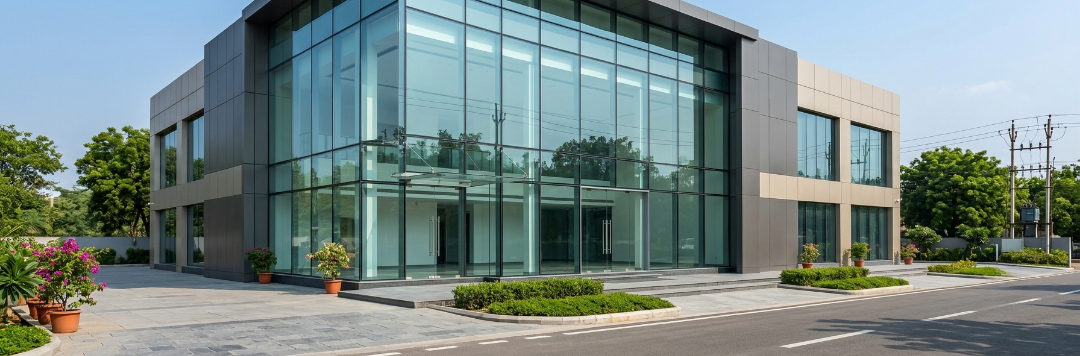
Structural glazing can minimise visible external framing and create large uninterrupted areas of glass. This gives commercial buildings a refined appearance without requiring excessive decorative elements.
For offices and showrooms, the clean facade can complement modern architectural styles. It can also be combined with ACP panels, stone finishes, textured walls, or other materials to create a balanced exterior.
A simple glass surface can therefore become an important part of the building's overall architectural identity.
2. Maximises Natural Daylight
Large glass panels can allow more daylight into interior areas. This can be useful in offices, reception areas, showrooms, and other spaces where a bright environment is desirable.
Natural daylight can also influence how interior spaces feel. A well-positioned glazed facade may make a room feel more open and connected to the outside.
However, more glass is not automatically better. Excessive solar exposure can increase heat inside the building. Therefore, glass selection should consider solar control, thermal performance, orientation, and the local climate.
For buildings in Coimbatore, these factors are particularly relevant because strong sunlight and warm conditions can affect indoor comfort.
3. Supports a Seamless Facade Design
A Seamless architectural glass facade can create a continuous visual surface across different sections of a building.
This effect works particularly well when the glass joints and supporting elements are carefully planned. Consistent panel sizes and accurate alignment can make a significant difference to the finished appearance.
The result is a facade that looks organised rather than visually crowded.
This does not mean every building needs a completely glass exterior. In many cases, using glass selectively produces a more practical and attractive result.
4. Gives Buildings a Sense of Openness
Glass naturally creates a visual connection between indoor and outdoor areas.
For a showroom, this can make products more visible from outside. For an office, glass can create an inviting entrance and brighter common areas.
At ground level, glazing can also help businesses create a stronger relationship between the building and its surroundings.
Privacy requirements should still be considered. Tinted, reflective, frosted, laminated, or other specialised glass options may be appropriate for specific areas depending on the project.
5. Works Well With Different Architectural Materials
Structural glazing does not have to be used alone.
It can work alongside Curtain Wall Glazing, ACP cladding, natural stone, textured surfaces, concrete finishes, and painted walls.
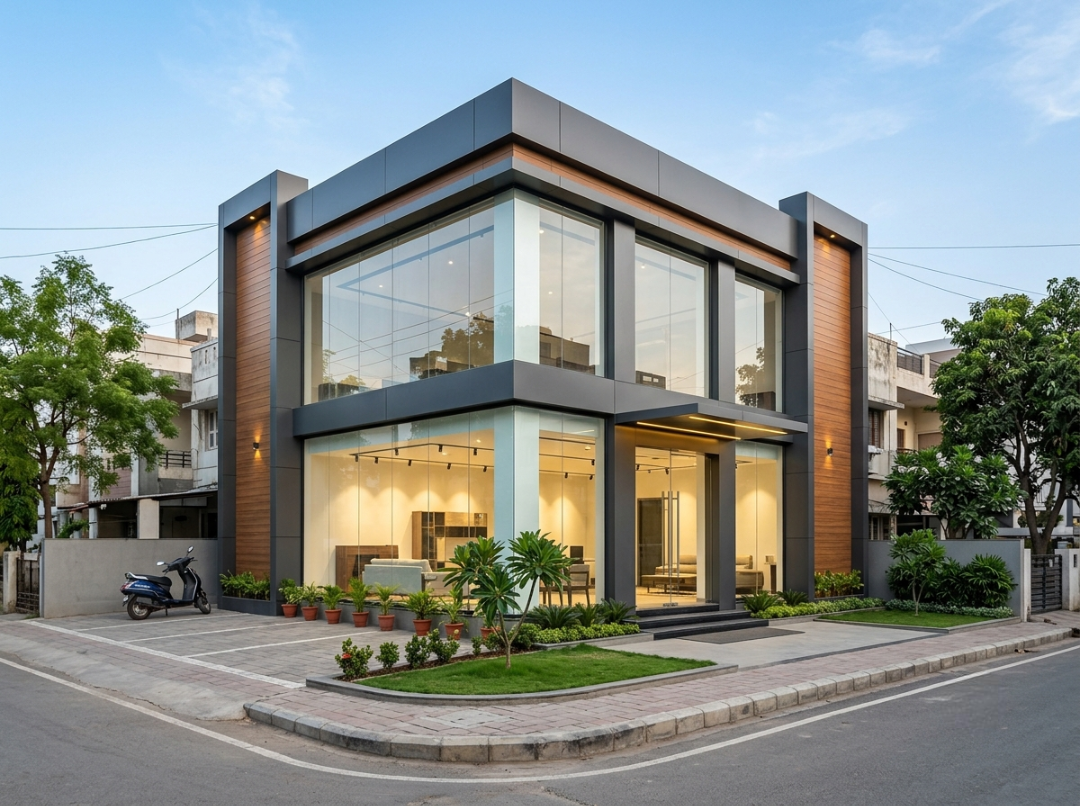
For example, a two-storey commercial building could use glass around the entrance while using textured wall panels on the upper portion. This creates a modern appearance without covering the entire structure with glass.
Material combinations also help break up large elevations and create clear visual sections.
6. Provides Design Flexibility
Architects can use different glass sizes, layouts, colours, finishes, and combinations to achieve different facade styles.
Glass can be arranged vertically, horizontally, or across selected feature areas. It can also be combined with lighting to change the appearance of the building after sunset.
These possibilities make structural glazing suitable for both simple and more expressive commercial designs.
The key is to maintain consistency between the facade design and the building's overall proportions.
7. Can Improve the Exterior Visibility of Showrooms
Showrooms often depend on visibility. A well-planned glazed facade can create a clear visual connection between displayed products and people outside the building.
Large glass sections can help create attractive display areas while allowing daylight to reach the interior.
However, designers should consider reflections and direct sunlight. Excessive glare can affect visibility from outside and comfort inside. The type and position of glass therefore matter as much as the size of the glazing.
8. Helps Create a Professional Office Environment
Modern offices often use glass to create brighter entrances, reception areas, meeting spaces, and common zones.
A carefully planned facade can give an office building a contemporary character while maintaining a professional appearance.
Glass can also be used selectively instead of covering every wall. This allows the designer to balance transparency, privacy, daylight, and solid wall areas.
The result can be both visually appealing and practical for everyday use.
9. Allows Different Levels of Transparency
Not every part of a commercial building needs fully transparent glass.
Different glass specifications can provide different levels of privacy and light transmission. This allows designers to use more transparent glazing in public areas and more private solutions in meeting rooms or service areas.
The choice may also depend on the building's orientation and surrounding environment.
This flexibility is useful when designing facades that need to balance appearance with functional requirements.
10. Can Be Adapted to Different Building Sizes
Structural glazing is not limited to large commercial towers.
Small and medium-sized offices, clinics, showrooms, retail spaces, and commercial buildings can also use structural glazing.
For a smaller building, partial glazing may be more suitable than a completely glazed facade. A glass entrance combined with solid exterior walls can provide a strong modern appearance while keeping the design proportionate.
This approach is especially useful when the goal is to create a contemporary building without making it look unnecessarily large.
Structural Glazing and Curtain Wall Glazing: Are They the Same?
Structural glazing and curtain wall glazing are related but should not be treated as identical terms.
Curtain wall glazing refers broadly to lightweight exterior wall systems attached to the building structure. Structural glazing describes an approach where the glass is attached to the supporting system in a way that reduces visible external framing.
Some curtain wall systems can incorporate structural glazing techniques.
The right choice depends on the building's design, structural requirements, glass specifications, installation method, and desired appearance.
How Does Glass Facade Installation Work?
The quality of Glass Facade Installation has a direct impact on the appearance and performance of the finished building.
The process generally begins with site measurements and design coordination. The supporting structure and required connection points are then prepared.
Next, the aluminium framing or supporting components are installed and aligned. Glass panels are prepared according to the approved specifications and attached using the selected structural system.
Sealants and weatherproofing components are then applied where required. Joints, drainage paths, alignment, and connections need careful inspection before the facade is considered complete.
The exact process varies between projects. Large panels, complex geometries, unusual connections, and demanding environmental conditions may require additional engineering and installation steps.
Choosing the Right Glass for Structural Glazing
The glass itself is one of the most important decisions in a glazed facade.
Depending on the project, designers may consider:
✓ Toughened glass for safety and strength requirements
✓ Laminated glass where additional safety and retention are required
✓ Insulating glass units for improved thermal performance
✓ Solar control glass to manage sunlight and heat
✓ Low-emissivity glass where thermal performance is a priority
✓ Tinted or coated glass for specific visual and solar-control requirements
The correct specification depends on the building and its intended use. Appearance should not be the only selection factor.
Is Structural Glazing Cost Effective?
The cost of structural glazing varies considerably. Glass specification, panel dimensions, framing, installation complexity, sealants, access requirements, and structural conditions can all influence the final cost.
For this reason, Cost Effective Structural Glazing Solutions for Office Buildings should not simply mean choosing the cheapest glass or reducing the number of components.
A more practical approach is to select materials according to actual performance requirements. Using glazing only where it provides a clear architectural or functional benefit can also help control project costs.
For example, a small office may not need a fully glazed elevation. Strategic glazing around the entrance and important facade areas may achieve the desired appearance with a more balanced material selection.
Important Factors to Consider Before Installation
Before choosing structural glazing, building owners should consider several factors.
Building Orientation
The direction of the glazed facade affects sunlight exposure. Glass selection should reflect the building's orientation and climate.
Structural Loads
The supporting structure must be capable of handling the loads associated with the glazing system. Engineering assessment is important, especially for larger panels.
Weather Protection
Proper seals, joints, drainage, and detailing help protect the building from rain and air infiltration.
Thermal Comfort
Large glass areas can affect indoor temperature. Solar control and thermal performance should be considered during design.
Maintenance Access
Glass needs regular cleaning and inspection. The design should provide practical access for maintenance.
Interior Requirements
Privacy, daylight, glare, visibility, and occupant comfort should be considered alongside the exterior appearance.
Common Mistakes to Avoid
A common mistake is choosing glass based only on colour or appearance. A visually attractive glass may not provide the performance required for a particular building.
Another mistake is treating installation as a simple finishing activity. Structural glazing requires accurate measurements, compatible materials, proper connections, and careful sealing.
Ignoring maintenance is another issue. Large glazed surfaces can become difficult to clean if access is not considered during the design stage.
It is also important to avoid excessive glazing simply because it looks modern. The best facade usually balances glass with solid materials and responds to the building's actual needs.
Modern Structural Glazing Ideas for Commercial Buildings
There are many ways to use structural glazing creatively.
A compact two-storey showroom can use a large glazed entrance as its main feature. ACP or textured panels can be added around the glass to create contrast.
An office building can combine vertical glass sections with solid wall areas. Warm lighting around the entrance can then highlight the facade in the evening.
Another option is to use different glass finishes across specific sections. This can create privacy while maintaining a modern exterior.
The most effective Structural Glazing Solutions usually focus on proportion and purpose rather than simply adding more glass.
Structural Glazing in Coimbatore's Commercial Architecture
Commercial architecture in Coimbatore includes offices, retail spaces, showrooms, clinics, hospitality buildings, and other property types. Each project has different requirements.
Local weather conditions should be considered when selecting glass and facade materials. Strong sunlight, heat, rain, dust, and maintenance requirements can all influence the design.
A facade should therefore be selected based on the building's orientation, usage, surrounding environment, and long-term maintenance needs rather than following a trend without evaluation.
DESIGNEXT has more than 12+ Years of industry experience, with 260+ Happy Clients. That experience can be useful when coordinating exterior design requirements, materials, and practical site considerations.
Frequently Asked Questions
What are the main benefits of structural glazing?
The main benefits include a clean exterior appearance, increased daylight potential, design flexibility, visual openness, and the ability to create modern commercial facades with reduced visible framing.
Is structural glazing suitable for office buildings?
Yes. Structural glazing can be suitable for offices when glass selection, solar exposure, privacy, thermal comfort, structural requirements, and maintenance are properly considered.
Is structural glazing stronger than normal glass installation?
Structural glazing is not simply a stronger version of ordinary glass installation. It is a specific facade system with engineered connections and support requirements. The safety and performance depend on the complete system and its installation.
Can structural glazing be used with ACP?
Yes. Glass and ACP can be combined to create contrast between transparent and solid facade areas. This is often useful for small and medium-sized commercial buildings.
Does structural glazing require regular maintenance?
Yes. Glass cleaning and periodic inspection of joints, seals, drainage areas, and other facade components are important for maintaining appearance and performance.
Is a completely glass building better?
Not necessarily. A completely glazed facade may not be suitable for every building. A combination of glass and solid facade materials can provide better balance between appearance, daylight, privacy, heat control, and maintenance.
Final Thoughts
Structural glazing can transform the appearance of a commercial building while offering practical benefits such as daylight, visual openness, and design flexibility. Its clean lines make it particularly suitable for modern offices, showrooms, retail spaces, and other commercial properties.
However, the success of a glazed facade depends on more than the appearance of the glass. Structural design, glass specification, weather protection, installation quality, thermal performance, maintenance, and building orientation all need to work together.
For businesses planning a modern commercial exterior in Coimbatore, understanding these factors can make the decision process much easier. The right approach is not to use as much glass as possible, but to use structural glazing where it provides meaningful architectural and functional value.