
What Are LED Display Boards and How Do They Work?
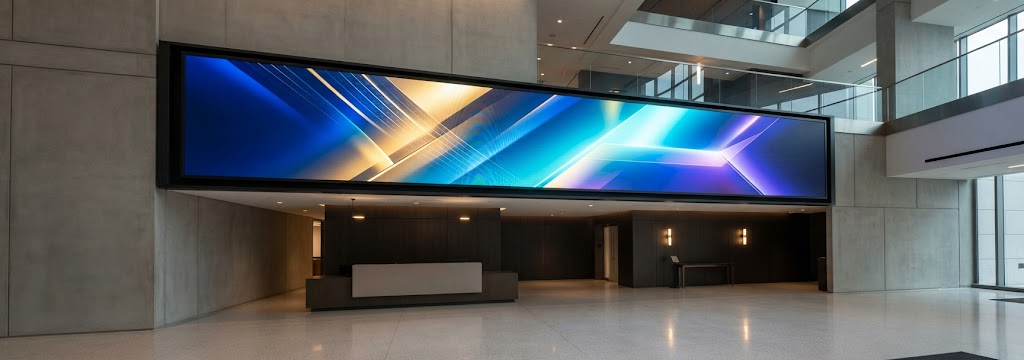
Walk through a busy commercial area, showroom, exhibition, airport, or corporate building, and you will likely notice bright digital messages displayed on screens. These are LED Display Boards, and they have become an important part of modern LED Boards & Digital Display Systems. Unlike traditional printed signs, they can show changing text, images, animations, videos, and announcements.
For businesses in Coimbatore and other growing commercial markets, understanding how these displays work can help when choosing a suitable digital communication solution. But what actually happens behind the screen? How Do LED Display Boards Work, and what makes them different from conventional signage? This guide explains the technology, benefits, common mistakes, and practical factors businesses should consider.
Why This Topic Matters
A display board is often one of the first things a customer, visitor, or passerby notices. A static sign communicates one message, while a digital display can present several messages throughout the day. This makes Digital LED Signage useful for businesses that regularly need to communicate changing information.
For example, a retail store can display promotional offers in the morning and highlight new products later in the day. A corporate office can use a digital screen for announcements, directions, or event information. In an exhibition environment, a display can introduce a company, demonstrate products, or play brand videos without requiring large amounts of printed material.
Customer expectations have also changed. People are accustomed to seeing information presented quickly through digital screens. A well-planned display can therefore make communication easier while creating a more modern first impression.
This does not mean that every business needs the largest or brightest screen available. The right solution depends on viewing distance, location, content, operating hours, ambient lighting, and the purpose of the display. Good LED Display Board Technology starts with understanding the actual communication requirement rather than choosing equipment based only on appearance.
How Do LED Display Boards Work?
At a basic level, an LED display board uses thousands of tiny light-emitting diodes to produce visible content. LEDs are semiconductor devices that produce light when electrical current passes through them.
An LED display normally contains many individual pixels. Each pixel can produce different levels of red, green, and blue light. By combining these three primary colours at different intensities, the display can reproduce a wide range of colours and visual content.
So, How LED Display Boards Work can be understood through a few main components:
LED Modules
LED modules are the building blocks of a larger display. Each module contains multiple LEDs arranged in a specific pattern. Several modules are combined to create a complete screen.
If one module needs maintenance, technicians can often access that section without replacing the entire display. This modular design is particularly useful for larger installations.
Control System
The control system receives the content and determines what should appear on the screen. Depending on the system, content may be sent from a computer, media player, controller, or network-connected device.
This is what allows a business to change messages without physically replacing the sign.
Power Supply
LED modules need electrical power to operate. Power supply units convert incoming electricity into the appropriate voltage required by the display components.
Reliable power management is important because large displays can contain many modules operating simultaneously.
Cabinet or Frame
The modules and electronic components are installed within a cabinet or supporting structure. For outdoor applications, the enclosure needs suitable protection against environmental conditions.
The physical construction therefore matters just as much as the visible screen itself.
Content Management
The final part is the content. Text, images, graphics, animations, videos, and other media can be prepared and scheduled using compatible software or control systems.
This combination of hardware and software is what turns individual LEDs into a useful LED Boards & Digital Display Systems solution.
Current Trends and Developments in LED Boards & Digital Display Systems
Modern LED Display Boards are becoming more flexible in terms of size, configuration, content, and installation. Businesses can select solutions based on the viewing environment rather than relying on a one-size-fits-all display.
Higher-Quality Visual Communication
Displays are increasingly being used for more than simple scrolling text. Businesses can present product images, promotional videos, brand messages, announcements, and other visual information.
Clear content design is important because even technically advanced Digital LED Signage can be ineffective if viewers cannot understand the message quickly.
Indoor and Outdoor Applications
LED technology is available for different environments. Indoor displays may focus more on image quality and viewing comfort, while outdoor displays need to consider factors such as brightness, weather exposure, and viewing distance.
Selecting the correct display for the environment helps maintain visibility without unnecessarily increasing equipment requirements.
Flexible Content Updates
One of the biggest advantages of digital signage is the ability to update information remotely or through a connected control system, depending on the installation.
This is useful when prices, schedules, promotions, announcements, or event information change regularly.
More Creative Display Formats
Businesses are also exploring different screen shapes, sizes, and configurations. Instead of treating a display as simply a rectangular sign, designers can integrate screens into larger communication environments.
The focus is increasingly on how LED Display Board Technology supports the overall customer or visitor experience.
Benefits of LED Display Boards
Better Visibility
Bright and dynamic content can attract attention more effectively than a conventional printed message in many environments. This can be useful for storefronts, reception areas, commercial buildings, and event spaces.
Visibility should still be matched to the environment. Excessive brightness or poorly selected content can reduce readability rather than improve it.
Easy Content Changes
Traditional signs usually need to be physically replaced when information changes. Digital displays allow content to be updated electronically.
For businesses running frequent promotions or announcements, this can make communication more convenient.
Multiple Messages on One Display
A single screen can communicate several messages at different times. For example, a showroom could rotate product information, offers, directions, and customer announcements throughout the day.
This makes LED Display Boards useful where available display space is limited.
Stronger Visual Communication
Images, motion, colours, and videos can communicate certain ideas more quickly than large blocks of written text.
A business introducing a product at an exhibition, for example, could use a short demonstration video instead of relying entirely on printed explanations.
Professional Presentation
A carefully designed digital display can contribute to a clean and organised visual environment. This is particularly relevant in reception areas, retail spaces, corporate offices, and exhibitions where first impressions matter.
However, professional presentation comes from both the hardware and the content. A high-quality screen cannot compensate for confusing graphics or poorly planned messaging.
Common Mistakes Businesses Make
Choosing a Screen Without Considering Viewing Distance
A screen that looks excellent up close may not be the right choice when viewers are standing much farther away. Pixel spacing and screen size should be considered according to where the audience will actually view the content.
Using Too Much Information
Trying to display every product, service, offer, and company detail at once can make the screen difficult to understand.
Effective Digital LED Signage usually works better when each message has a clear purpose and strong visual hierarchy.
Ignoring the Installation Environment
Indoor and outdoor installations have different requirements. Businesses should consider sunlight, weather exposure, ventilation, mounting conditions, and operating hours before selecting equipment.
Focusing Only on Screen Appearance
A display may look impressive in a showroom but perform differently in the actual installation location. Viewing angle, ambient light, content type, maintenance access, and available space all matter.
Poor Content Planning
Even the best LED Display Board Technology needs suitable content. Small text, low-contrast graphics, overly fast animations, and long messages can reduce communication effectiveness.
Planning content before installation can prevent many of these problems.
Expert Tips Before Choosing or Using LED Boards & Digital Display Systems
Start by defining the purpose. Ask what the display needs to accomplish. Is it intended for advertising, information, directions, branding, product demonstrations, announcements, or a combination?
Next, study the viewing environment. Measure the available space and estimate how far viewers will normally stand from the screen. Consider whether the display will be indoors or outdoors and how much ambient light it will receive.
Content should also be planned early. Decide what type of material will be shown and how frequently it will change. A business using videos and detailed graphics may have different requirements from one displaying simple text and numbers.
The control method is another important consideration. Some businesses may need scheduled content, remote updates, multiple displays, or network-based management. Understanding these requirements before installation can help avoid unnecessary complications.
Maintenance should not be overlooked. Ask how modules can be accessed, how faults are handled, and whether the installation allows technicians to work safely. A practical display should be easy to manage throughout its useful life.
Budget and timeline also deserve attention. The initial equipment cost is only one part of the decision. Installation, electrical requirements, content management, maintenance, and future expansion may also need to be considered.
When evaluating a service provider, look beyond the visual appearance of previous projects. Consider relevant experience, technical understanding, installation quality, and whether the proposed solution matches your actual requirements. For example, DESIGNEXT brings 12+ Years of industry experience and has worked with 260+ Happy Clients, providing useful experience when evaluating display requirements and implementation considerations.
For businesses that want to understand the broader options available before making a decision, What Are LED Display Boards and How Do They Work? provides a useful starting point for understanding the technology and its applications.
Frequently Asked Questions
1. What is an LED display board?
An LED display board is a digital screen made from many light-emitting diodes. These LEDs work together as pixels to display text, images, graphics, animations, or videos.
2. How Do LED Display Boards Work?
How Do LED Display Boards Work depends on several connected components. LED modules create the visible pixels, control systems process and send content, power supplies provide electricity, and software or media systems manage what appears on the display.
3. Where can LED display boards be used?
LED Display Boards can be used in retail stores, corporate offices, educational institutions, commercial buildings, reception areas, exhibitions, transportation facilities, and outdoor advertising environments. The suitable display specification depends on the location and intended use.
4. Are LED display boards suitable for outdoor use?
Yes, specific LED displays are designed for outdoor environments. Outdoor applications require appropriate consideration of brightness, weather protection, viewing distance, installation structure, and environmental conditions.
5. What should I consider before choosing an LED display board?
Consider the display location, viewing distance, screen size, indoor or outdoor environment, content type, brightness requirements, control system, maintenance access, installation conditions, and budget. Choosing based on these practical factors can lead to a more suitable LED Boards & Digital Display Systems solution.
Conclusion
LED display boards combine hardware, electronics, control systems, and digital content to create flexible communication tools for modern businesses. Understanding the basic principles behind How LED Display Boards Work makes it easier to compare different solutions and identify what is actually needed.
The most effective display is not necessarily the biggest or brightest one. It is the one that matches the viewing environment, communicates information clearly, supports the intended content, and can be managed and maintained effectively.
For businesses considering Digital LED Signage, starting with the purpose, audience, location, and content requirements is the best way to make an informed decision.