
ACP vs Glass Facade: Which Is Better for Commercial Buildings?
The exterior of a commercial building influences how people perceive the business inside it. A modern façade can improve visual appeal, support branding, and give a building a well-planned appearance. When selecting materials, two popular choices are aluminium composite panels and glass façades. A well-planned ACP Elevation Design can create a contemporary exterior, while glass can provide transparency and a bright architectural look.
For commercial buildings in Coimbatore, the decision between ACP and glass depends on several factors. Budget, maintenance, energy performance, building function, design preferences, privacy, and local environmental conditions all matter. There is no single material that is automatically better for every project.
This guide compares ACP and glass façades in simple terms. It explains their advantages, limitations, suitable applications, design possibilities, and important factors to consider before making a decision.
ACP Facade vs Glass Facade: What Is the Difference?
ACP stands for Aluminium Composite Panel. It is a lightweight cladding material made with aluminium surfaces and a core material between them. Panels are commonly used on commercial exteriors to create clean lines, geometric patterns, contrasting sections, and branded façade elements.
A glass façade uses glass panels as a major part of the exterior envelope. It is commonly associated with offices, corporate buildings, hotels, retail spaces, and modern commercial architecture. Glass allows natural light into interior spaces and can create a visually open appearance.
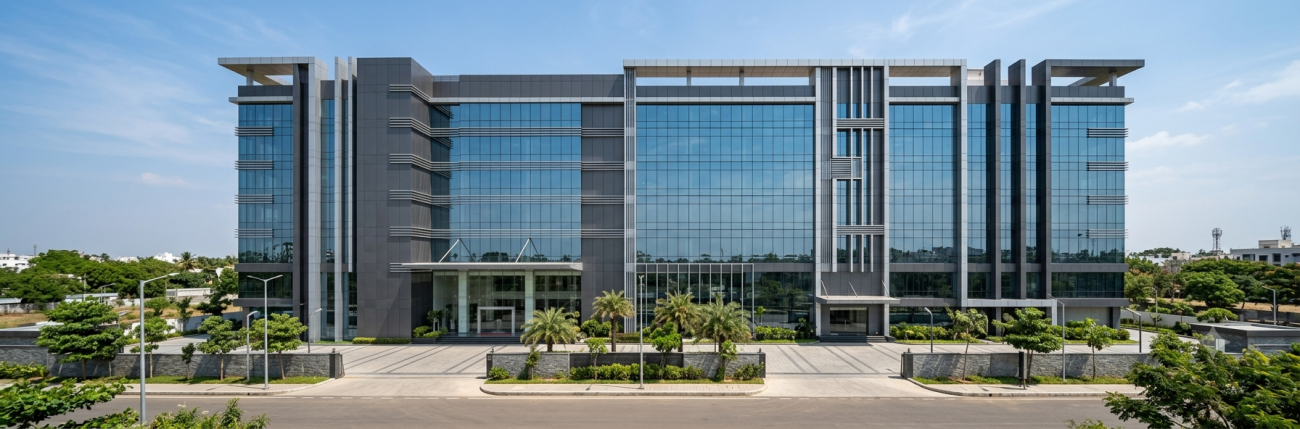
An ACP Building Facade generally provides more flexibility for solid exterior surfaces. Glass, on the other hand, creates transparency and visual connection between the inside and outside.
The better option depends on what the building needs to achieve.
Why Material Selection Matters
A commercial façade is not simply a decorative layer. It interacts with the building structure, weather conditions, interior environment, maintenance requirements, and energy performance.
For example, a showroom may benefit from large glass areas because customers can see products from outside. An office may use a combination of glass and ACP to balance daylight, privacy, and visual identity.
A commercial building facing a busy road may also need to consider dust, noise, heat, cleaning requirements, and privacy. In such situations, selecting a façade material based only on appearance may create problems later.
That is why architects and building owners should evaluate the complete project before finalising the façade system.
ACP Facade: Key Advantages
ACP is widely used in contemporary commercial architecture because it offers several design and practical benefits.
1. Flexible Design Options
ACP panels can be used in different colours, finishes, shapes, and arrangements. Designers can create horizontal bands, vertical features, entrance frames, projecting elements, and geometric patterns.
This flexibility makes ACP suitable for businesses looking for a distinctive exterior without covering every part of the building with glass.
A carefully planned ACP Elevation Design can also combine multiple finishes to create depth and visual contrast.
2. Modern Appearance
ACP can create a smooth and structured appearance. Metallic, matte, solid, textured, and other finishes can be selected depending on the manufacturer's available range and project requirements.
This makes ACP useful for creating a Stylish architectural exterior for offices, retail buildings, educational institutions, clinics, and commercial complexes.
3. Lightweight Cladding
ACP is generally lighter than many traditional exterior cladding materials. Its lightweight nature can be useful when designing façade systems, although the supporting structure and installation method still need professional evaluation.
The actual weight and performance depend on the selected panel specification and supporting framework.
4. Suitable for Branding
Commercial buildings often need visible branding. ACP can provide solid surfaces around entrances, signage zones, windows, and other architectural features.
For example, a company logo can be positioned against a contrasting ACP background, making the entrance easier to identify.
5. Design Versatility
One of the strongest benefits of ACP is its ability to work with other materials. It can be combined with glass, stone, concrete finishes, metal, and architectural lighting.
This allows designers to create a balanced façade rather than depending on one material throughout the building.
Glass Facade: Key Advantages
Glass has its own strengths and is particularly useful when transparency and daylight are important.
1. Natural Light
One of the main reasons businesses choose glass façades is the ability to bring natural light into interior spaces.
This can create a brighter and more open environment. However, the amount of glass should be planned carefully because excessive glazing can increase solar heat gain depending on orientation, glass type, shading, and climate.
2. Open Visual Appearance
Glass can make a building appear larger and more connected to its surroundings. This effect is particularly useful for corporate offices, hotels, showrooms, and buildings where visual openness is part of the architectural concept.
3. Premium Contemporary Look
Large glass surfaces can create a sophisticated commercial appearance. When combined with suitable framing, lighting, and solid façade elements, glass can produce a strong modern architectural identity.
4. Visibility for Retail Spaces
Retail stores and showrooms often use glass because visibility is important. Customers can see products, displays, and interiors without entering the building.
However, privacy and solar control should still be considered where required.
Which Is More Suitable for Office Buildings?
Office buildings often need a balance between professional appearance, natural light, privacy, thermal comfort, and maintenance.
A fully glazed façade can create a bright and visually open workplace. However, excessive glazing may require careful solar control, shading, and suitable glass selection.
ACP can provide solid sections where privacy and visual definition are needed. This is why mixed façades are common in modern office architecture.
For businesses searching for Creative ACP Elevation Design for Office Buildings, a combination of ACP panels, controlled glazing, entrance features, and architectural lighting can provide a practical and visually balanced solution.
The final design should be based on the building's orientation, floor plan, local climate, usage, and technical requirements.
ACP and Glass Can Work Together
Choosing between ACP and glass does not always mean selecting only one material.
Many modern commercial buildings use both. ACP can define solid portions of the façade while glass provides daylight and transparency.
For example, a building may use glass around the main office areas, ACP around service zones, and a contrasting ACP frame around the entrance. This approach can create visual hierarchy while keeping the exterior balanced.
Using Exterior Wall Cladding Panels alongside glazing also gives architects more freedom to control where solid and transparent surfaces appear.
The key is proportion. Too much of either material can affect the overall visual balance.
Latest ACP Facade Design Trends
Commercial façade preferences continue to change, but several design approaches remain popular because they focus on simplicity and functionality.
Minimalist Panel Arrangements
Clean lines and limited colours can create a professional appearance. Instead of using many decorative elements, designers can focus on proportions and panel alignment.
Contrasting Finishes
Combining two complementary ACP finishes can create visual separation between building sections. For example, a neutral main façade can be paired with a darker entrance feature.
Vertical Elements
Vertical ACP features can emphasise building height. They can also be used around windows or entrance areas to create architectural rhythm.
Geometric Features
Controlled geometric patterns can make a façade more distinctive. However, these features should support the building's overall structure rather than become unnecessary decoration.
ACP and Glass Combination
Combining solid ACP sections with glazed areas remains a practical way to balance transparency and visual identity.
These approaches are part of the Latest ACP Facade Design Trends, but trends should not replace project-specific planning.
Factors to Consider Before Choosing ACP or Glass
Building Orientation
The direction each façade faces affects sunlight exposure. Glazing requirements should be evaluated carefully, especially on elevations receiving strong direct sunlight.
Maintenance
Consider how easily the façade can be cleaned and inspected. Buildings in dusty or high-traffic areas may need more frequent exterior maintenance.
Privacy
Offices, clinics, financial institutions, and other businesses may require privacy in certain areas. ACP can provide solid surfaces where transparent glazing would not be appropriate.
Energy Performance
Glass selection, shading, insulation, ventilation, and façade design all influence building performance. A façade should be considered as part of the complete building envelope.
Budget
The total project cost includes more than the visible material. Framing, fixing systems, fabrication, labour, access equipment, detailing, glazing systems, and maintenance should all be considered.
Safety and Specifications
Panel and glass specifications should be selected according to the building's requirements and applicable standards. Fire performance, structural considerations, wind loads, fixing methods, and installation quality should be reviewed by qualified professionals.
Common Mistakes to Avoid
One common mistake is choosing a material simply because another building uses it. A façade that works for a showroom may not be suitable for an office.
Another mistake is focusing only on the initial installation cost. Maintenance and long-term performance should also be considered.
Ignoring the surrounding environment can create problems. Dust, rainfall, sunlight, and pollution can influence the appearance and maintenance needs of a commercial façade.
Poor detailing is another concern. Joints, corners, drainage, edges, glazing connections, and fixing points need proper attention.
Finally, avoid designing the façade without considering the interior. Window positions, daylight requirements, privacy, air conditioning loads, and workspace layouts can influence the best exterior solution.
Expert Tips for Selecting the Right Facade
Start with the building's purpose. Define whether visibility, privacy, daylight, branding, or architectural character is the main priority.
Next, study the building orientation and surrounding environment. This helps determine where glazing and solid cladding may be more appropriate.
Create a simple material palette. Two or three complementary materials can often produce a cleaner result than using too many finishes.
Review physical samples where possible. Colours and textures can appear different under natural and artificial lighting.
Ask for detailed drawings before fabrication begins. Panel sizes, joints, edges, corners, openings, and fixing arrangements should be clearly understood.
Most importantly, do not separate design from technical execution. A visually attractive façade still needs proper engineering, suitable materials, accurate fabrication, and skilled installation.
DESIGNEXT, with 12+ years of industry experience and 260+ happy clients, can be considered as an experienced reference when evaluating façade design requirements in Coimbatore. The focus should remain on choosing a solution that suits the building rather than selecting a material simply because it is popular.
For a broader understanding of how ACP can be planned for commercial exteriors, the ACP vs Glass Facade: Which Is Better for Commercial Buildings? comparison can help readers evaluate both options before finalising a façade concept.
Frequently Asked Questions
Is ACP better than glass for commercial buildings?
Neither material is always better. ACP is useful for solid, lightweight, and highly customisable exterior sections, while glass is useful when natural light, transparency, and visibility are priorities.
Is ACP suitable for modern office buildings?
Yes. ACP can be used to create clean lines, geometric elements, entrance features, and contrasting façade sections. It can also be combined with glass for a balanced office exterior.
Can ACP and glass be used together?
Yes. Combining ACP and glass is common in contemporary commercial architecture. ACP can provide solid surfaces and branding zones, while glass can provide transparency and daylight.
Which facade requires more maintenance?
Maintenance depends on the building location, material specification, environmental exposure, and installation quality. Glass may require frequent cleaning to maintain clarity, while ACP may require cleaning based on its finish and surrounding conditions.
What should I consider before choosing a commercial facade?
Consider building purpose, orientation, climate, privacy, natural light, energy performance, maintenance, budget, safety requirements, material quality, and installation expertise.
Conclusion
ACP and glass both have an important place in modern commercial architecture. ACP offers solid surfaces, design flexibility, branding opportunities, and contemporary finishes. Glass provides transparency, daylight, visibility, and an open architectural character.
The best solution is not necessarily the material with the most attractive appearance. It is the one that fits the building's function, environment, budget, maintenance plan, and long-term design goals.
For many commercial projects, combining both materials can provide the best balance. A carefully planned ACP Building Facade can define solid architectural areas, while glass can be introduced where natural light and visibility are valuable.
Whether the project uses ACP, glass, or a combination of both, informed planning is essential. By comparing practical requirements alongside aesthetics, business owners and architects can create a façade that remains functional, professional, and visually relevant for years to come.