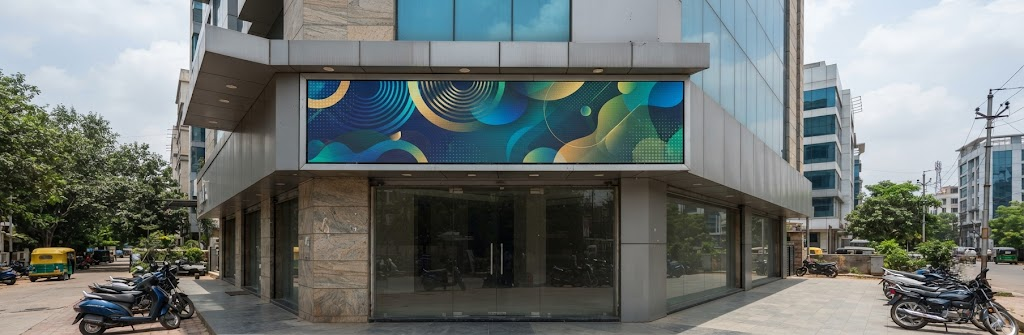


Benefits of LED Display Boards for Businesses
Businesses today need more than traditional signs to attract attention and communicate with customers. The benefits of LED display boards include better visibility, flexible content, stronger brand communication, and improved customer engagement. LED Boards & Digital Display Systems offer businesses a practical way to display messages, promotions, announcements, product information, and brand content in an easy-to-update format.
From retail stores and restaurants to corporate offices, showrooms, educational institutions, and public spaces in Coimbatore, digital displays are becoming an important part of modern business communication. Understanding the benefits, working process, and best practices can help businesses decide whether an LED display solution is suitable for their needs.
Why This Topic Matters
Customers often make quick judgments based on what they see first. A well-positioned digital display can immediately communicate what a business offers, highlight important information, or guide visitors to the right place. Unlike static signs, an LED screen can show changing content without requiring the physical sign to be replaced.
This is particularly useful for businesses that regularly promote different products, offers, events, or announcements. For example, a retail store can display product promotions during the day, while a restaurant can highlight different menu items or special offers. Corporate offices can also use digital screens for reception messages, internal communication, or visitor information.
Competition also makes visibility important. A business located on a busy street may have only a few seconds to capture attention. Bright and properly designed LED Digital Display Boards can help important messages stand out, especially when they are positioned where customers can easily see them.
First impressions matter in indoor environments too. A professional digital display at a reception area, showroom, or business entrance can create a more organized communication experience. However, the effectiveness of the screen depends on content, placement, viewing distance, brightness, and overall design.
Current Trends and Developments in LED Boards & Digital Display Systems
Modern LED Signage Technology has developed beyond simple scrolling text. Businesses can now use displays for videos, graphics, animations, announcements, product demonstrations, and other dynamic content. This gives businesses greater flexibility compared with traditional printed signage.
One important development is the use of high-resolution LED displays for environments where viewers stand relatively close to the screen. Smaller pixel pitches can provide sharper images, while larger displays can be selected for longer viewing distances. The right specification depends on the installation location rather than simply choosing the highest available resolution.
Content flexibility is another important trend. Businesses can update digital messages based on time, season, promotion, event, or audience. A showroom, for example, may use product videos during business hours and promotional content during a campaign.
Remote content management is also useful for businesses with multiple displays or locations. Depending on the system, content can be prepared and updated through suitable software rather than manually changing each screen. This can make communication more convenient when displays are installed across different areas.
Interactive and multimedia communication is another growing area. LED screens can work alongside QR codes, social media campaigns, product demonstrations, and other digital experiences. The aim is not to add technology simply for appearance, but to make information easier and more engaging for the intended audience.
Key Benefits of LED Display Boards
1. Better Visibility and Attention
One of the main benefits of an LED display is visibility. Bright, dynamic content can attract attention more effectively than a sign that remains unchanged.
For businesses located in busy commercial areas, this can be particularly useful. A display can highlight the business name, important services, current promotions, or directions without depending on a single permanent message.
However, brightness should be selected carefully. Excessive brightness can be uncomfortable, while insufficient brightness can make content difficult to read. Outdoor and indoor installations may require different specifications.
2. Easy Content Updates
Traditional printed signs usually need to be physically replaced when information changes. Digital displays make this process more flexible.
Businesses can update promotional messages, announcements, prices, schedules, or event information according to their requirements. This is especially helpful for businesses that frequently change their communication.
The Working Principle of LED Display Boards allows individual LED components to produce light in different intensities and colors. These elements work together to create text, images, animations, and video content on the screen.
3. Stronger Brand Communication
A digital display can support consistent brand communication by using the same colors, typography, imagery, and messaging across different business locations.
For example, a showroom can use branded product visuals on its display while maintaining the same visual identity used in brochures, packaging, and other marketing materials. Consistency can make a business easier for customers to recognize.
The important point is to keep the content clear. A screen filled with too many messages can reduce its impact. Good digital signage usually focuses on one primary message at a time.
4. Better Customer and Visitor Experience
Digital displays can do more than advertise. They can help visitors understand where to go, what services are available, what is happening, or what they need to know.
For example, a corporate office may display reception instructions or meeting information. A healthcare facility can use screens for general announcements. A retail business can guide customers toward product categories or current promotions.
This makes How LED Digital Display Boards Work especially relevant to businesses considering digital communication. The value comes not only from the screen itself but also from how the display is integrated into the customer journey.
5. Supports Multiple Types of Content
An LED display can present different forms of information, including text, images, graphics, animations, and video.
This flexibility allows businesses to create different content for different situations. A restaurant may display food visuals, while an educational institution may use the same type of system for announcements and event information.
Businesses should still consider the viewing environment. Content designed for a large outdoor display may not be suitable for a small indoor screen viewed from a short distance.
6. Useful for Different Business Environments
LED display solutions can be adapted to many business settings. Retail stores, restaurants, shopping areas, offices, showrooms, educational institutions, event venues, and commercial buildings can all have different digital display requirements.
The size, pixel pitch, brightness, viewing distance, installation method, and content system should be selected according to the specific environment.
For businesses researching LED Boards & Digital Display Systems, this is an important consideration. There is no single display specification that works equally well for every location.
7. Can Improve Communication Efficiency
When information changes frequently, digital communication can reduce dependence on repeatedly printing and replacing physical promotional materials.
Businesses can prepare different content and display it according to their communication schedule. This can be useful for temporary promotions, announcements, events, seasonal campaigns, and changing product information.
The actual efficiency depends on the content management setup and how frequently the business needs to make updates.
Common Mistakes Businesses Make
Using Too Much Information
One of the most common mistakes is trying to place too much text on a display. Customers may only look at the screen for a short time, particularly in busy locations.
Keep the main message short and make important information easy to understand.
Choosing the Wrong Screen for the Location
Screen size, brightness, pixel pitch, and viewing distance should match the installation environment. Choosing equipment only based on appearance or price can lead to poor visibility.
Before selecting an LED Digital Display Board, businesses should evaluate where the screen will be installed and how far viewers will normally stand.
Ignoring Content Design
A technically advanced display cannot compensate for confusing content. Small text, weak contrast, excessive animation, and crowded layouts can make communication difficult.
Content should be designed specifically for the screen rather than simply transferring a poster or brochure onto it.
Poor Placement
Even a high-quality display will have limited impact if it is blocked by objects, positioned too high, or placed where customers cannot comfortably view it.
Businesses should consider customer movement, viewing angles, lighting conditions, and surrounding signage before installation.
Focusing Only on Appearance
A visually impressive screen is not automatically an effective communication tool. The display should have a clear purpose.
Before installation, businesses should decide whether the main goal is advertising, information sharing, navigation, brand communication, entertainment, or a combination of these.
Expert Tips Before Choosing or Using LED Display Boards
Start by defining the purpose of the display. Knowing what the screen needs to achieve will make it easier to select the right size, location, and content approach.
Next, understand the audience. Consider who will see the display, how long they are likely to view it, and what information they need. A screen for passing traffic requires a different approach from one installed inside a reception area.
Pay attention to viewing distance. This is an important factor when selecting pixel pitch and screen resolution. A display intended for close viewing generally needs different specifications from a large outdoor screen viewed from a considerable distance.
Plan content before installation. Decide what messages, visuals, videos, or announcements will be shown. Content planning can also help determine whether the display needs specific software or content management features.
Lighting should also be considered. Indoor displays may require controlled brightness, while outdoor displays need to remain visible under changing daylight conditions. Proper installation and environmental suitability are equally important.
It is also worth considering maintenance and service requirements. Businesses should understand how the system will be maintained, how content will be updated, and what technical support may be required over time.
When comparing service providers, look beyond the equipment alone. Review relevant experience, previous work, technical understanding, installation practices, and the ability to recommend a solution based on the actual business environment.
For example, DESIGNEXT brings 12+ Years of industry experience and has worked with 260+ Happy Clients. Such experience can be useful when evaluating practical considerations such as display selection, installation requirements, and overall communication objectives.
Understanding the Working Principle of LED Display Boards
So, What Are LED Display Boards and How Do They Work?
LED display boards use light-emitting diodes, commonly called LEDs, to produce visible light. A display contains many individual LED elements arranged in a structured pattern. By controlling these elements, the system can produce different colors, shapes, text, images, and video.
A controller receives the content and sends the appropriate signals to the display modules. The modules then control the brightness of individual LEDs to create the required visual output.
In color displays, combinations of red, green, and blue light are used to produce a wide range of colors. The distance between LED pixels is commonly described as pixel pitch. Smaller pixel pitch generally allows for finer detail at closer viewing distances.
Understanding this basic process helps businesses make better decisions. Instead of choosing a screen simply because it looks impressive, they can consider resolution, brightness, viewing distance, installation conditions, content requirements, and maintenance needs.
Frequently Asked Questions
1. What are LED display boards used for?
LED display boards are used for advertising, announcements, product information, directions, branding, event communication, public information, and other forms of digital messaging.
2. Are LED display boards suitable for indoor and outdoor use?
Yes. Different LED displays are designed for different environments. Indoor and outdoor installations can have different requirements for brightness, protection, viewing distance, and construction.
3. How often can content be changed on an LED display?
Content can generally be changed whenever required, depending on the controller and content management system being used. Some systems allow convenient remote updates.
4. How do I choose the right LED display for my business?
Consider the installation location, viewing distance, screen size, brightness, pixel pitch, content type, operating conditions, maintenance requirements, and available budget before selecting a display.
5. Are LED display boards better than traditional signs?
They offer an important advantage when businesses need frequently changing or dynamic content. Traditional signs can still be suitable for permanent information, so the right choice depends on the business objective and communication requirements.
Conclusion
LED displays have become a flexible communication option for businesses that need to present changing information in a clear and visually engaging way. From promotions and product information to announcements and visitor guidance, the right display can serve several practical purposes.
The key is to choose technology based on actual requirements rather than appearance alone. Screen size, viewing distance, brightness, content, placement, maintenance, and installation conditions all influence the final result.
Businesses exploring LED Boards & Digital Display Systems should therefore begin with their communication goals and audience needs. With thoughtful planning and suitable technology, digital displays can become a useful part of a modern business communication strategy.