
Exterior Wall Design Trends for Offices and Showrooms
The outside of an office or showroom often shapes the first impression of the business. A well-planned Exterior Wall Designing approach can make a building look modern, professional, and inviting without making the design overly complicated. From material selection to colours, textures, lighting, and façade details, small decisions can have a noticeable effect on the overall appearance.
For commercial properties in Coimbatore, exterior design also needs to work with the local environment and everyday use. Sunlight, rain, dust, maintenance, and visibility from the road all matter. The best design is one that combines visual appeal with practical performance and suits the purpose of the business.
Why Exterior Wall Design Matters for Offices and Showrooms
An office exterior can communicate professionalism and reliability, while a showroom façade may need to attract attention and encourage visitors to enter. Although their purposes are different, both types of buildings benefit from a clear and well-balanced exterior.
Modern Exterior Wall Architecture focuses on more than simply covering the outside surface. It considers the relationship between walls, windows, entrances, signage, lighting, colours, and surrounding areas. When these elements work together, the building feels more complete.
A good façade also helps define the character of a property. It can make a compact building appear more organised and give an older structure a refreshed appearance.
1. Clean and Minimal Exterior Designs
Minimalism continues to be a practical approach for commercial buildings. Instead of using many decorative features, this style focuses on clean lines, simple forms, and carefully selected materials.
For offices, a minimal façade can create a calm and professional atmosphere. For showrooms, it can provide a clean background that allows signage and display areas to receive attention.
This approach to Exterior Wall Designing often uses neutral colours such as white, grey, beige, charcoal, or muted earth tones. A contrasting accent material can then be added to create a focal point.
2. ACP Panels With Modern Patterns
Aluminium Composite Panels, commonly known as ACP, are widely used in contemporary commercial façades. Their clean surface and flexible design possibilities make them suitable for offices and showrooms.
ACP can be installed in horizontal or vertical arrangements. Different shades can also be combined to create frames, bands, blocks, and geometric patterns.
The key is to avoid using patterns simply for decoration. A well-planned arrangement can highlight architectural proportions and create stronger Facade Design Elements around entrances, windows, and corners.
3. Natural and Stone-Look Textures
Natural textures can make a modern commercial building feel warmer. Stone, brick, wood-look panels, and textured surfaces can be introduced into selected sections of the façade.
These finishes work particularly well when combined with smoother materials such as ACP or glass. The difference in texture adds depth and prevents large wall surfaces from looking flat.
For offices, stone-look accents can create a premium but understated appearance. In showrooms, textured sections can help define the entrance or display area while supporting the overall Exterior Wall Architecture.
4. Strong Entrance Features
The entrance is one of the most important parts of an office or showroom exterior. It is where visitors naturally focus their attention.
Modern designs often use a combination of cladding, glass, lighting, signage, and architectural framing around the entrance. A different texture or darker colour can also be used to make the doorway more visible.
The entrance should remain practical as well. It needs enough space for movement and should be easy to identify from outside. A visually appealing entrance becomes more effective when it also provides a comfortable visitor experience.
5. Large Glass and Transparent Elements
Glass can create a bright and contemporary appearance. It is commonly used for showroom fronts, office entrances, windows, and selected façade sections.
When combined with solid wall materials, glass creates a useful contrast. The transparency can make the building feel more open, while ACP, stone, or textured panels provide structure.
However, glass should be selected with practical factors in mind. Heat, glare, privacy, cleaning, safety, and orientation can affect its suitability. The goal is to use glass where it supports both function and design.
6. Vertical Design Features
Vertical fins, panels, grooves, and architectural screens can add height and rhythm to a commercial façade. They are particularly useful for buildings that have a narrow or vertically oriented appearance.
Vertical features can also break up large wall surfaces. They may be placed around windows, corners, entrances, or selected upper-floor sections.
When used carefully, these details contribute to Visually appealing building walls without requiring a complicated overall design.
7. Horizontal Lines and Layered Forms
Horizontal design elements can create a sense of width. Long bands, projecting panels, horizontal grooves, and layered finishes can make a compact commercial building appear broader.
This trend works well for low-rise offices and showrooms. It can also help organise different floor levels visually.
A combination of horizontal and vertical features can create a balanced façade. However, both should follow the actual structure of the building instead of being added randomly.
8. Warm Architectural Lighting
A commercial façade should not lose its visual character after sunset. Architectural lighting can highlight important features and improve the building's nighttime appearance.
Warm LED strips, wall washers, recessed fixtures, and concealed lights can be integrated into the façade. Lighting can highlight textures, entrance frames, vertical fins, signage areas, or wall projections.
Lighting should be planned alongside the Exterior Wall Designing concept. Excessive brightness can create glare and make the façade uncomfortable to view. Subtle lighting is often more effective when the goal is to highlight architectural details.
9. Two-Tone Colour Combinations
Using two main colours is a simple way to add visual depth. One colour can act as the base, while the second is used for selected panels, frames, or feature sections.
For example, a light wall can be combined with charcoal ACP panels. Beige can work with darker brown or stone textures. Grey can be paired with wood-look elements for a warmer appearance.
The right combination depends on the building, surroundings, branding, and natural lighting. A restrained palette usually creates a more professional result than several strong colours competing for attention.
10. Wood-Look Exterior Features
Wood-look finishes can add warmth to otherwise modern façades. They can be used around entrance frames, ceiling sections, feature walls, or selected vertical panels.
These finishes are particularly useful for offices, cafés, retail showrooms, and other commercial spaces that want a welcoming appearance.
Combining wood-look elements with glass and neutral ACP panels can create a balanced contemporary facade. The material should be selected for exterior suitability and ease of maintenance.
11. Creative Feature Walls
A feature wall can become the visual highlight of an office or showroom. It may use a distinctive texture, colour, pattern, cladding material, or lighting arrangement.
The feature wall does not need to cover the entire building. A carefully selected section can be enough to create a strong focal point.
This is one of the most useful Creative Exterior Wall Design Concepts because it allows businesses to introduce personality without making every part of the facade visually complex.
12. Sustainable and Practical Material Choices
Modern exterior design is increasingly focused on materials that offer a good balance between appearance, durability, and maintenance.
When selecting a facade material, businesses should consider how it will perform in the local environment. Exposure to sunlight, rain, dust, moisture, and pollution can affect exterior surfaces.
A practical Exterior Wall Architecture plan should also consider cleaning access, replacement requirements, installation quality, and the expected lifespan of the finish.
13. Layered Facade Designs
Layering different surfaces can create depth on a flat building. Designers can combine recessed areas, projecting panels, screens, lighting, and contrasting finishes.
The result can make a simple facade look more dynamic without changing the basic structure of the building.
For example, an office could use a neutral base wall with projecting ACP frames around selected windows. A showroom could use a darker entrance frame with glass and illuminated signage.
14. Simple Geometric Patterns
Geometric designs are another popular choice for modern commercial facades. Rectangles, vertical strips, squares, angled panels, and repeated lines can create a structured appearance.
These patterns work particularly well with ACP and metal panels because the materials can be arranged into clean shapes.
However, geometric designs should match the proportions of the building. A pattern that is too large or complicated can overpower a small commercial property.
Choosing the Right Trend for Your Building
Not every design trend suits every office or showroom. The building's size, structure, location, business type, and surrounding properties should influence the final decision.
A showroom may need stronger visual elements because it relies on visibility and customer attraction. An office may benefit from a more refined facade that communicates professionalism.
Before finalising the design, it is useful to compare materials, colours, textures, and lighting options. This makes it easier to understand how the finished facade may look.
Businesses looking for more inspiration can explore Exterior Wall Design Trends for Offices and Showrooms before deciding on a suitable direction.
Exterior Wall Design for Small and Medium Commercial Buildings
Modern exterior design is not limited to large commercial complexes. Small and medium-sized buildings can also achieve an attractive appearance with the right planning.
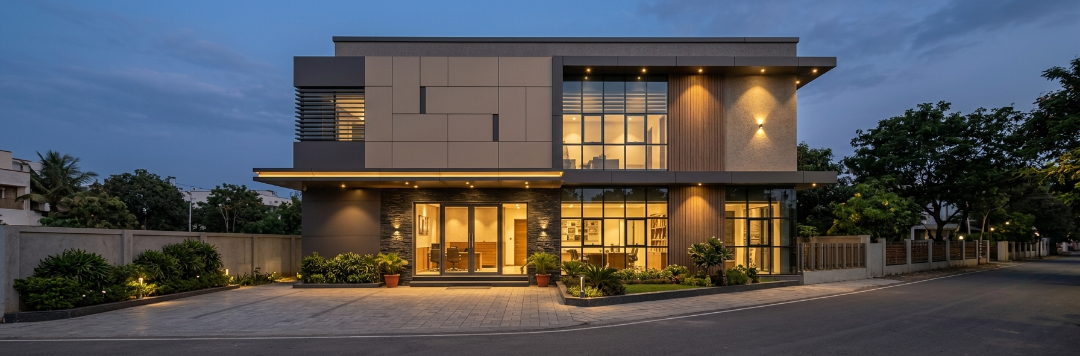
A compact two-storey office or showroom does not need many materials. A simple combination of ACP, textured paint, glass, and lighting can be enough to create a modern facade.
For smaller properties, proportions are especially important. Large decorative features can make the building feel crowded. Instead, selected feature areas can create a cleaner and more balanced result.
Exterior Design for Offices
Office buildings generally benefit from designs that look professional without being overly decorative. Neutral colours, glass, ACP panels, clean lines, and subtle lighting are common choices.
The reception entrance can become the main focal point. Vertical panels or simple geometric elements can then provide visual structure around windows and upper walls.
The objective of Exterior Wall Designing for an office should be to create a welcoming and organised environment that reflects the nature of the business.
Exterior Design for Showrooms
Showrooms usually need stronger visibility because the exterior can influence customer interest. The entrance, display windows, signage, and lighting therefore deserve special attention.
A clear facade can make the brand easier to notice from the road. However, the design should not become too busy.
Using one main material with one or two accent finishes can create an attractive showroom exterior. Glass, ACP, lighting, and bold entrance features can work together to create a strong visual identity.
Common Mistakes to Avoid
Using Too Many Materials
Combining too many finishes can make a building look confusing. Choose materials that complement each other.
Ignoring Building Proportions
A design should follow the structure of the building. Oversized patterns or features may not suit a compact property.
Choosing Colours Without Considering the Surroundings
The surrounding buildings, road conditions, landscape, and natural light can affect how colours appear.
Forgetting Maintenance
Every exterior material requires some level of care. Cleaning and repair requirements should be considered before installation.
Following Trends Blindly
A design trend may look impressive today but may not suit every property. Choose ideas that match the building and are likely to remain visually comfortable over time.
Planning Exterior Wall Design in Coimbatore
Commercial buildings in Coimbatore can benefit from facade designs that combine modern appearance with practical material selection. Local weather exposure and maintenance requirements should be considered when choosing exterior finishes.
DESIGNEXT brings more than 12 years of industry experience to exterior design projects. Its experience with 260+ happy clients also provides exposure to different commercial requirements and architectural preferences.
The focus should remain on creating a facade that suits the property rather than simply copying an existing design. A successful exterior should look good from a distance, remain interesting when viewed closely, and continue to perform in everyday conditions.
Frequently Asked Questions
What are the latest exterior wall design trends for offices?
Popular approaches include clean minimal designs, ACP cladding, glass elements, textured surfaces, vertical features, two-tone colour combinations, geometric patterns, and integrated architectural lighting.
Which exterior design is suitable for a showroom?
Showrooms often benefit from clear entrances, attractive display areas, glass sections, visible signage zones, ACP panels, and carefully planned lighting. The final design should reflect the type of products or services offered.
Can small commercial buildings have modern exterior designs?
Yes. Small and medium-sized commercial buildings can achieve a modern appearance using a limited combination of materials, colours, textures, and lighting. Good proportions are more important than using many decorative elements.
Is ACP good for modern commercial exterior design?
ACP can be suitable for many commercial facades because it supports clean surfaces and different design arrangements. The correct product specification and installation method should be selected based on project requirements.
How do I choose a suitable exterior wall trend?
Consider the building's purpose, size, existing architecture, local weather, maintenance needs, budget, and desired appearance. Select trends that support the building rather than overpowering it.
Conclusion
Exterior wall design has an important role in shaping the appearance of offices and showrooms. The right combination of materials, colours, textures, lighting, and architectural details can make a commercial building look modern without making it unnecessarily complicated.
From ACP panels and glass to stone textures, geometric patterns, vertical features, and warm lighting, there are many ways to create Creative Exterior Wall Design Concepts. The best choice depends on the building's structure, business purpose, surroundings, and maintenance requirements.
A thoughtful Exterior Wall Designing approach should balance appearance with practicality. Whether the property is a compact showroom, a two-storey office, or a larger commercial space, careful planning can create a facade that looks professional, welcoming, and relevant for years to come.