
How Exterior Wall Design Improves Commercial Building Appearance
The exterior of a commercial building creates the first impression before anyone walks through the entrance. A well-planned Exterior Wall Designing approach can make a property look modern, professional, welcoming, and visually balanced. From wall materials and colours to lighting and surface textures, every detail can influence how people see a commercial space.
For businesses in Coimbatore, exterior appearance can be especially important because commercial buildings often stand along busy roads and developing business areas. A thoughtfully designed façade helps a building look distinctive without making it unnecessarily complicated. Good design is not only about decoration. It should also consider durability, maintenance, climate, functionality, and the character of the business.
Why Exterior Wall Design Matters for Commercial Buildings
A commercial building is more than a functional structure. Its appearance communicates something about the business operating inside it. Clean lines, suitable materials, and balanced colours can create a sense of professionalism, while poor material combinations may make even a large building look unfinished.
Effective Exterior Wall Designing brings different architectural elements together. Walls, windows, entrance areas, signage zones, lighting, and decorative features should work as one visual composition. When these elements are planned together, the building can achieve a stronger and more consistent identity.
The exterior also influences how customers, employees, visitors, and passersby experience the property. An attractive façade can make an entrance easier to notice and create a more welcoming atmosphere.
Creates a Strong First Impression
People often form an opinion about a commercial property within a short time of seeing it. The condition and design of the exterior can influence whether the building appears modern, reliable, premium, or outdated.
This is where Outdoor Wall Styling becomes useful. Simple improvements such as textured panels, modern colour combinations, vertical design elements, or carefully positioned lighting can significantly change the visual character of a building.
A professional exterior does not always require expensive materials. The right proportions, colour balance, and placement of design features can have a major impact. Even a simple building can look sophisticated when its exterior elements are properly coordinated.
Gives the Building a Clear Identity
Commercial buildings often need to stand out from surrounding properties. A unique façade can help people recognise a business location more easily. However, being different does not mean adding too many decorative elements.
Good Exterior Wall Designing focuses on creating a clear visual identity. The design can reflect the type of business, the surrounding environment, and the desired brand image. For example, an office building may benefit from a clean and structured façade, while a retail space may use stronger colours and more prominent visual elements.
A consistent exterior can also make different sections of a building appear connected. This is particularly useful for large commercial properties with multiple floors or separate functional areas.
Improves the Visual Balance of the Building
A building can contain many elements, including windows, doors, balconies, columns, service areas, and signage. If these features are not visually balanced, the façade may look crowded or uneven.
Modern Facade Surface Treatment helps organise the appearance of these elements. Different textures, panel directions, colours, and finishes can be used to create visual balance. Horizontal elements can make a structure feel wider, while vertical features can add a sense of height.
The goal is not to cover every available surface. Instead, selected areas should receive attention while other parts remain visually calm. This approach creates a cleaner and more comfortable exterior.
Makes Older Buildings Look More Modern
Renovating an existing commercial building can be a practical alternative to completely rebuilding it. Exterior improvements can refresh an ageing property and give it a more contemporary appearance.
A suitable Exterior Wall Decoration strategy may include new cladding, updated colours, textured surfaces, architectural lighting, or redesigned entrance features. These changes can transform the appearance without changing the entire building structure.
Before choosing materials, the existing wall condition should be checked. Designers should also consider moisture, cracks, drainage, exposure to sunlight, and other practical factors. A visually attractive design should also be suitable for long-term use.
The Role of ACP in Exterior Wall Design
Aluminium Composite Panels, commonly known as ACP, are widely used in modern commercial façade applications. They offer a clean surface and can be used to create geometric patterns, bands, frames, projections, and other contemporary features.
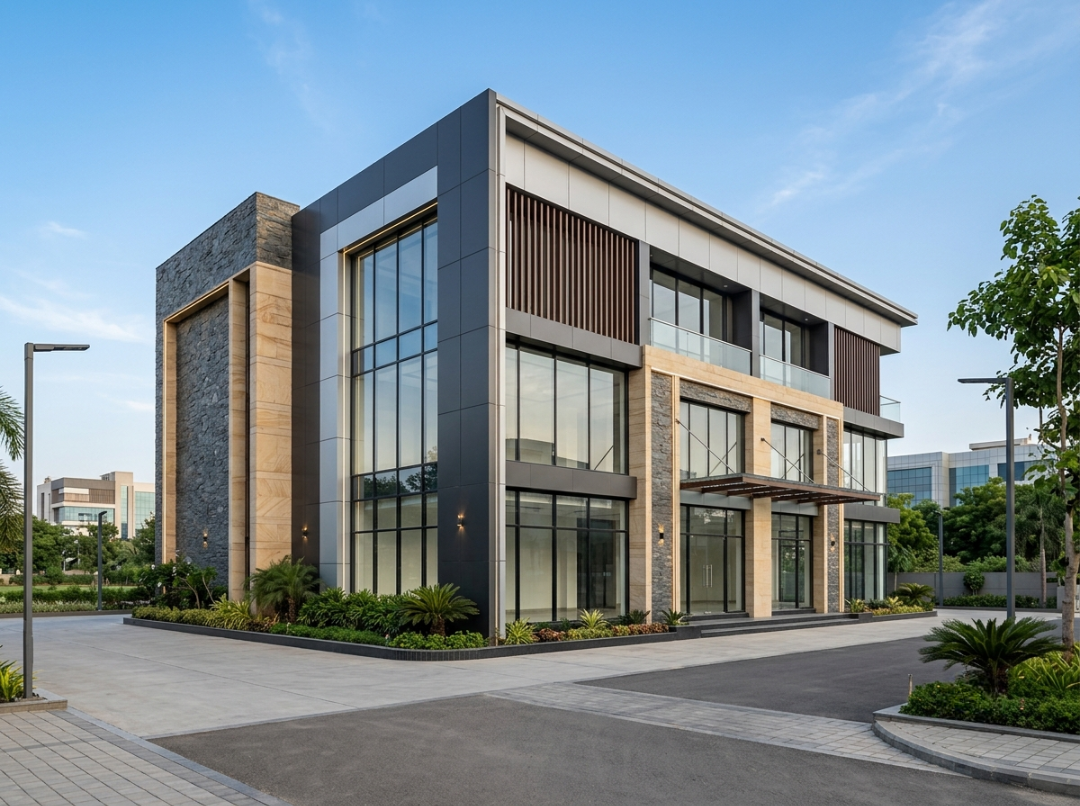
ACP can support different approaches to Exterior Wall Designing because panels can be arranged in various directions and combinations. They can also be paired with glass, stone-look finishes, concrete textures, or other façade materials.
However, ACP should not be selected only because it looks modern. The required panel specification, installation method, location, exposure conditions, and maintenance requirements should all be considered before making a decision.
Combining Different Materials
Using a single material across an entire façade can sometimes make a building look flat. Combining complementary materials can create depth and visual interest.
For example, ACP can be combined with glass around entrance areas, stone textures near the ground floor, or textured finishes on selected wall sections. These combinations can create Contemporary Exterior Wall Ideas without overwhelming the building.
Material combinations should follow a clear design concept. Similar tones can create a subtle appearance, while contrasting materials can highlight important architectural areas. The transition between materials should also look intentional rather than accidental.
Importance of Colour Selection
Colour is one of the easiest ways to influence the appearance of a commercial building. However, selecting colours only according to personal preference can create an inconsistent result.
A good Exterior Wall Designing plan considers the building's size, surroundings, architectural style, and amount of natural light. Neutral shades can create a professional appearance, while darker tones can be used for selected sections to add depth.
Bright colours may work well as accents rather than covering large wall areas. The final combination should remain visually comfortable and should support the overall architectural design.
Adding Architectural Lighting
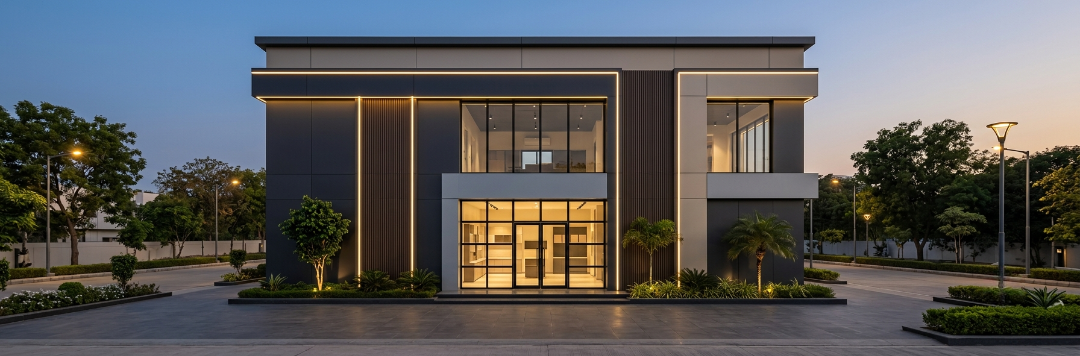
Exterior lighting can change how a commercial building looks after sunset. It can highlight entrance areas, wall textures, vertical features, signage zones, and important architectural details.
Lighting should be treated as part of the design rather than as an afterthought. With the right placement, Outdoor Wall Styling can remain visually effective during both daytime and nighttime.
Wall washers, linear lighting, recessed fixtures, and other architectural lighting options can be used depending on the building design. Excessive brightness should be avoided because it can reduce visual comfort and create unnecessary glare.
Creating Depth With Textures and Patterns
Flat walls can sometimes appear plain, especially on large commercial structures. Texture and pattern can introduce depth without requiring excessive decoration.
Architectural panels, grooves, fins, stone-look surfaces, perforated elements, and other details can create shadow and visual variation. These features are particularly useful for Facade Surface Treatment when designers want to emphasise selected parts of a building.
Patterns should be used carefully. Repeating the same pattern across every wall may make the façade look busy. A better approach is to create one or two focal areas and keep supporting sections relatively simple.
Designing Around the Entrance
The entrance is one of the most important areas of a commercial building. It is where customers and visitors naturally focus their attention.
A well-designed entrance can combine the main façade material with lighting, signage, glass, landscaping, and architectural framing. This creates a clear focal point and improves the overall attractive building exterior.
The entrance should also remain practical. Adequate space, visibility, accessibility, weather protection, and easy movement should be considered alongside appearance.
Considering the Local Climate
Exterior materials are exposed to sunlight, rain, dust, humidity, and changing weather conditions. Therefore, commercial façade design should not focus only on appearance.
For buildings in Coimbatore, material selection and installation quality should take local environmental conditions into account. Proper detailing can help reduce maintenance problems and protect exterior surfaces over time.
A professional Exterior Wall Designing process should consider drainage, joints, surface protection, cleaning requirements, and the expected lifespan of materials. These practical decisions can help maintain the building's appearance for longer.
Low-Maintenance Design Is Better for Businesses
Commercial properties usually need to remain presentable without requiring constant maintenance. A complicated façade may look impressive initially but can become difficult to clean and repair.
When planning Exterior Wall Decoration, businesses should think about how easily each material can be maintained. Dust accumulation, staining, water marks, fading, and access for cleaning are practical issues worth considering.
Simple forms with durable materials can often provide a better long-term solution than overly decorative designs. The best façade is one that continues to look good while remaining manageable to maintain.
Planning Unique Designs for Modern Commercial Spaces
There is no single exterior style that works for every commercial building. The design should respond to the building's purpose, size, location, surrounding architecture, and available budget.
Businesses looking for How Exterior Wall Design Improves Commercial Building Appearance can explore different approaches before finalising a façade concept. A Unique Exterior Wall Designing for Modern Commercial Spaces plan may include a combination of ACP, glass, textured surfaces, lighting, colours, and architectural features.
The key is to create a design that looks distinctive while remaining practical. A façade should support the building rather than distract from it.
How to Choose the Right Exterior Wall Design
Choosing a façade design becomes easier when the decision is based on practical questions rather than appearance alone.
Understand the Building Purpose
First, identify the type of commercial property. An office, showroom, hospital, hotel, educational building, and retail space may require different visual approaches.
Study the Existing Architecture
The new design should work with the existing structure. Windows, columns, floor levels, and entrance locations should be considered before introducing new façade elements.
Select Suitable Materials
Choose materials based on appearance, durability, maintenance, installation requirements, and environmental exposure. The cheapest option may not always provide the best long-term value.
Create a Colour Plan
Limit the number of main colours and use accent shades carefully. A coordinated colour palette usually creates a more professional appearance.
Add Design Features With Purpose
Every decorative element should have a reason. Patterns, panels, fins, lighting, and textures should highlight architectural features rather than simply fill empty spaces.
Consider Future Maintenance
Think about cleaning, repainting, panel replacement, access, and weather exposure. A beautiful design should remain practical after installation.
Common Exterior Wall Design Mistakes to Avoid
One common mistake is using too many materials on a single façade. Multiple textures and colours can make a building look confusing when they do not share a clear design direction.
Another issue is choosing materials without considering the existing structure. A façade should be compatible with the building and properly detailed for installation.
Ignoring lighting is another missed opportunity. Even a good daytime façade can lose its impact at night if important areas are poorly illuminated.
Businesses should also avoid copying another building without considering their own property. Contemporary Exterior Wall Ideas should be adapted to the building's proportions, surroundings, and functional requirements.
Why Professional Planning Makes a Difference
Exterior design involves more than selecting attractive colours and materials. Proportion, alignment, material transitions, lighting, installation details, and structural conditions all affect the final result.
With over 12 years of industry experience, DESIGNEXT approaches commercial exterior projects with attention to both design and practical requirements. Its experience across commercial projects and work with 260+ happy clients provides useful insight into how design decisions can affect the finished appearance.
The objective should always be to create a façade that fits the building instead of following a trend without considering its suitability.
Future Trends in Commercial Exterior Design
Modern commercial architecture is increasingly focused on clean forms, functional materials, energy-conscious solutions, and visually simple façades. Large glass sections, metallic panels, natural textures, vertical elements, and integrated lighting continue to influence commercial exterior concepts.
Digital design tools also make it easier to visualise different materials and colour combinations before installation. This can help property owners understand how a proposed Eye catching exterior architect concept may look from different angles.
At the same time, timeless design remains important. Trends can change quickly, but balanced proportions, quality materials, practical detailing, and a clear visual hierarchy can remain effective for many years.
Frequently Asked Questions
What is Exterior Wall Designing?
Exterior Wall Designing is the process of planning and improving the outside walls and façade of a building using materials, colours, textures, patterns, lighting, and architectural features.
How can exterior wall design improve a commercial building?
A well-planned façade can improve the building's first impression, create a stronger visual identity, highlight important architectural areas, and give an older structure a more modern appearance.
Which materials are commonly used for commercial exterior walls?
Common options include ACP, glass, stone, textured finishes, metal elements, concrete finishes, and other exterior-grade cladding materials. The right choice depends on the building and its practical requirements.
Is exterior wall decoration suitable for old commercial buildings?
Yes. Exterior Wall Decoration can be used to refresh an existing commercial property. However, the existing wall condition, moisture, cracks, drainage, and installation requirements should be assessed first.
How do I choose a modern exterior wall design?
Start by considering the building type, architectural structure, surroundings, materials, colours, maintenance needs, and budget. Then create a design that balances appearance with practical performance.
Conclusion
A commercial building's exterior plays an important role in how the property is perceived. Thoughtful Exterior Wall Designing can turn a plain structure into a professional and visually engaging commercial space.
From ACP panels and glass to textures, colours, patterns, and architectural lighting, there are many ways to improve a façade. The best approach is not necessarily the most decorative one. It is the design that balances appearance, functionality, durability, maintenance, and the character of the building.
Whether the goal is to modernise an existing property or create a new commercial façade, careful planning can make a noticeable difference. A strong exterior should look attractive today while remaining practical and relevant for years to come.