
How to Choose the Right ACP Sheet for Building Elevation
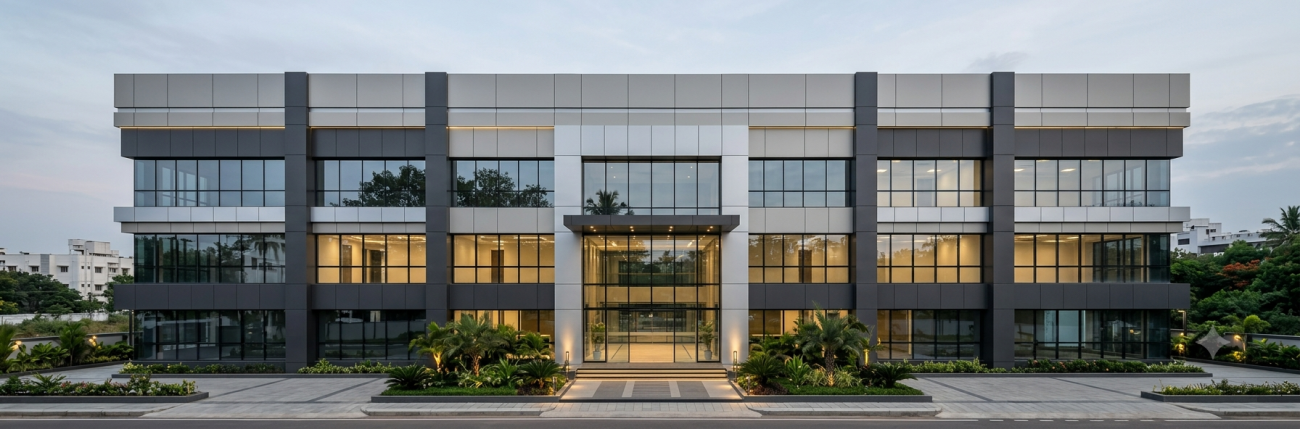
The right exterior finish can completely change how a building looks from the street. A well-planned ACP Elevation Design can give a plain facade a clean, modern appearance while also creating a consistent visual identity for the property. In Coimbatore, where commercial buildings, offices, showrooms, and residential projects often combine practical construction with contemporary styling, choosing the right ACP sheet requires more than selecting a colour.
ACP sheets come in different finishes, thicknesses, colours, textures, and quality levels. Each option can affect the appearance, durability, maintenance, and overall performance of a building facade. Understanding these factors before starting the project can help property owners make a practical decision.
What Is an ACP Sheet?
ACP stands for Aluminium Composite Panel. It consists of aluminium layers bonded to a core material. This construction creates a lightweight panel that designers can use for exterior and interior applications.
ACP sheets have become popular for building facades because they offer a smooth surface and support different design styles. Designers can cut, bend, route, and shape the panels to create lines, curves, frames, and other facade elements.
For a modern ACP Facade Design, the sheet acts as both a finishing material and an important visual element. Its colour, texture, and surface finish can influence the character of the entire building.
Why Does ACP Sheet Selection Matter?
Not every ACP sheet suits every building. A sheet that works well for an indoor feature wall may not provide the same suitability for an exterior facade.
Outdoor applications expose the material to sunlight, rain, dust, humidity, and temperature changes. Therefore, property owners should consider the intended application before choosing a panel.
The right Aluminium Composite Panel Cladding can help create a consistent facade while supporting the design requirements of the building. Material selection also affects fabrication, installation, cleaning, and future maintenance.
1. Consider the Location of the Building
Start by looking at the building location. An exterior facade faces different conditions from an indoor wall.
A commercial building located beside a busy road may collect more dust and pollution than a building in a quieter area. A facade exposed to direct sunlight may also need a suitable finish that can handle regular outdoor exposure.
For buildings in Coimbatore, designers should consider the local environment, building orientation, surrounding structures, and exposure to weather before finalising the panel.
The location should also influence the colour and texture selection. A practical Contemporary building facade should look attractive while remaining suitable for its surroundings.
2. Choose the Appropriate ACP Thickness
ACP sheets come in different thickness options. The suitable thickness depends on the application, design, supporting structure, panel size, and installation method.
Thicker panels can offer greater rigidity for certain applications, while lighter options may suit specific interior or decorative requirements. However, thickness alone does not determine overall quality.
The designer and fabricator should evaluate the complete system, including the panel, framing, fixing method, joints, and building surface.
For a large ACP Elevation Design, selecting the appropriate panel specification helps create a stable and visually consistent facade.
3. Check the Core Type
The core forms the central part of an ACP sheet. Different products can use different core materials and compositions.
For exterior building applications, the panel specification should match the project's safety and performance requirements. Building owners should check the manufacturer's technical information instead of choosing a panel based only on its appearance.
Fire performance can also become an important consideration, especially for larger commercial buildings and projects with specific building requirements.
A suitable ACP Facade Design should therefore consider safety, application, and local project requirements alongside visual appearance.
4. Select the Right Surface Finish
ACP sheets offer several surface finishes. Common choices include solid colours, metallic finishes, wood-inspired textures, stone-inspired patterns, brushed effects, and other decorative surfaces.
Each finish creates a different visual impression.
A solid matte finish can create a simple and professional appearance. Metallic finishes can add a sharper contemporary character. Wood-inspired textures can introduce warmth, while stone-inspired finishes can create a heavier architectural appearance.
The right choice depends on the building design. A balanced Modern ACP Exterior Design Ideas approach usually considers the facade colour, windows, doors, lighting, surrounding structures, and landscape together.
5. Think About Colour Carefully
Colour can influence how large, small, bright, or visually heavy a building appears.
Lighter shades can create an open and clean appearance, while darker shades can add depth and contrast. Neutral colours often work well with glass, metal, stone, and other facade materials.
However, colour selection should not rely only on current design trends. Consider how the colour will work with the building architecture and surrounding environment.
For commercial projects, the facade may also need to follow the company's existing branding. A thoughtful Contemporary building facade can use brand colours without making the exterior look overly busy.
6. Consider Sunlight and Outdoor Exposure
Sunlight plays an important role in exterior material selection. A building that receives strong direct sunlight throughout the day may require a panel finish suitable for that environment.
Ask the supplier for technical information about the product's intended application, finish, weather resistance, and maintenance requirements. Avoid making assumptions based only on a sample displayed indoors.
The building's orientation can also influence the design. A facade facing strong sunlight may appear different from one facing a shaded area.
These details matter when planning long-term Aluminium Composite Panel Cladding for an exterior elevation.
7. Decide Between Matte, Glossy, and Metallic Finishes
Surface appearance can change the character of an elevation even when two panels use the same colour.
Matte finishes generally provide a softer appearance and can suit minimalist architectural styles. Glossy finishes create more reflection and can make certain facades look brighter. Metallic finishes can add a modern commercial appearance.
However, highly reflective surfaces may show surrounding reflections more clearly. Dust, fingerprints, and surface marks may also appear differently depending on the finish.
For a practical ACP Elevation Design, consider both appearance and maintenance before selecting the final surface.
8. Match the ACP With Other Facade Materials
A building facade rarely uses ACP alone. Designers often combine ACP with glass, concrete, stone, wood finishes, metal, or decorative elements.
The materials should complement each other rather than compete for attention.
For example, a dark ACP panel can create contrast around large glass windows. A wood-inspired ACP finish can add warmth to a facade dominated by concrete. Metallic panels can work with clean glass and aluminium elements in a modern office design.
Good ACP Facade Design focuses on balance, proportion, and visual continuity.
9. Think About Panel Size and Joint Layout
Panel size and joint arrangement can influence the appearance of the entire elevation.
Visible joints can create horizontal or vertical patterns. Designers can use these lines to emphasise the building's height, width, entrances, or architectural sections.
Poorly planned joints can make a facade look fragmented. A carefully planned layout can make the building appear more structured.
Before fabrication, review the panel layout with the overall elevation drawing. This step helps ensure that windows, doors, corners, signage, and other elements align properly with the ACP panels.
10. Check Fabrication Quality
Even a high-quality ACP sheet can produce a poor result when fabrication lacks precision.
The fabrication team needs to measure panels accurately and create clean folds, cuts, grooves, and joints. Incorrect measurements can create uneven gaps or alignment problems during installation.
The team should also follow the manufacturer's recommendations for cutting and fixing the material.
Quality fabrication plays an important role in achieving a professional Modern ACP Exterior Design Ideas result.
11. Consider Maintenance Before Installation
Every exterior material needs some level of maintenance. ACP generally offers a relatively easy-to-clean surface, but the actual maintenance requirement depends on the finish, location, pollution levels, and surrounding environment.
Buildings near busy roads may require more frequent cleaning because dust and vehicle pollution can accumulate on the facade.
Think about access to the facade before installation. A design that looks excellent but makes cleaning difficult can create unnecessary maintenance challenges later.
A practical Aluminium Composite Panel Cladding system should consider future cleaning and inspection as part of the design process.
12. Compare Quality, Not Just Price
Price should not become the only factor when selecting an ACP sheet.
Two panels may look similar in a small sample but differ in their specifications, coating, core, thickness, warranty terms, and intended application.
Ask the supplier for product specifications and understand what the quoted price includes. Check whether the quotation covers only the ACP sheets or also includes framework, fabrication, accessories, installation, and finishing.
This approach makes it easier to compare different options fairly.
13. Consider the Building's Architectural Style
The ACP sheet should support the architecture instead of covering it unnecessarily.
A simple office building may benefit from clean horizontal lines and neutral colours. A showroom may use stronger contrasts and distinctive facade elements. A residential building may need warmer textures and a more subtle colour combination.
The goal should remain clear: use the material to enhance the building's existing form.
A well-planned Contemporary building facade can combine simplicity with visual interest without relying on excessive decorative elements.
14. Plan the Design Before Ordering Materials
Do not select ACP sheets only after fabrication begins. Finalise the basic elevation concept first.
Review the building's front, side elevations, entrance, windows, signage areas, lighting positions, and other architectural elements. Then select the ACP finish that fits the complete design.
Digital elevation views can help property owners understand how different colours and textures may look together.
This planning stage can reduce material changes and help create a more consistent ACP Elevation Design.
15. Work With an Experienced Design Team
ACP facade work involves several stages, including design planning, material selection, measurement, fabrication, structural support, installation, and finishing.
A design team with relevant experience can help coordinate these stages and identify practical issues before installation.
DESIGNEXT brings 12+ years of industry experience and has worked with 260+ happy clients. Experience can help the team understand how material selection, facade proportions, fabrication details, and installation methods affect the final result.
The focus should remain on selecting materials that suit the building rather than simply following the latest trend.
Common Mistakes to Avoid When Choosing ACP Sheets
Several simple mistakes can affect the final appearance and performance of an ACP facade.
✓ Choosing a panel based only on colour
✓ Ignoring the intended exterior application
✓ Selecting thickness without considering the complete system
✓ Focusing only on the lowest quotation
✓ Ignoring fire and safety requirements
✓ Choosing a finish without considering sunlight
✓ Forgetting about cleaning and maintenance access
✓ Failing to coordinate panel joints with windows and doors
✓ Using too many colours or textures on one facade
✓ Starting fabrication before finalising the elevation design
Avoiding these mistakes can make the material selection process much easier.
How to Choose the Right ACP Sheet: A Simple Checklist
Before placing an order, check these points:
✓ Confirm whether the product suits exterior use.
✓ Review the panel thickness and construction.
✓ Ask for technical specifications.
✓ Check the core type and relevant safety requirements.
✓ Select a surface finish that suits the building.
✓ Consider sunlight and weather exposure.
✓ Compare colour samples in suitable lighting.
✓ Review the panel joint pattern.
✓ Plan maintenance and cleaning access.
✓ Check the fabrication and installation method.
✓ Compare complete project costs rather than sheet prices alone.
This checklist can help property owners make a more informed decision.
Final Thoughts
Choosing an ACP sheet for building elevation involves more than picking an attractive colour. The right decision should consider the building location, panel specifications, core type, surface finish, colour, sunlight exposure, fabrication, installation, maintenance, and overall architectural style.
A well-planned facade can improve the visual character of a building while maintaining a practical approach to material selection. For commercial and residential projects, the best result usually comes from coordinating the ACP panels with windows, lighting, signage, entrances, and other architectural elements.
If you are planning a facade project, understanding Modern ACP Exterior Design Ideas can help you explore different ways to combine colour, texture, panel direction, and complementary materials. You can also explore How to Choose the Right ACP Sheet for Building Elevation for a focused guide when comparing ACP sheet options for your project.